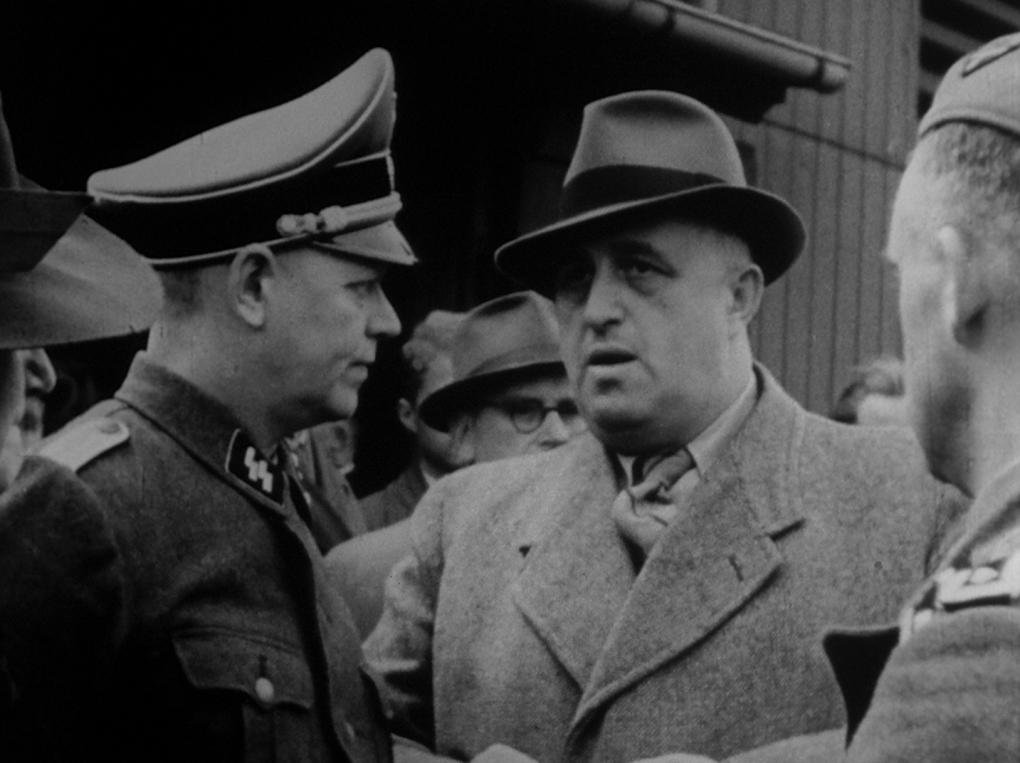
Introduction: What Is Fascisterne?
The word Fascisterne is Danish for “the fascists.” It refers to a particular or previously identified group of people associated with fascism, a political ideology historically linked to authoritarian leadership, extreme nationalism, political repression, and hostility toward democratic institutions. Although the word itself is straightforward, understanding its historical significance requires looking at the political movements that shaped Europe during the twentieth century.
Fascisterne is not, by itself, the official name of a political party or a separate ideology. Its precise meaning depends on the context in which it appears. A Danish history book might use the term when discussing Italian fascists, Danish Nazi supporters, or people associated with other authoritarian movements.
The subject is particularly relevant to Denmark because fascist and National Socialist organizations operated there before and during the Second World War. Their history illustrates how extremist political ideas crossed national borders, why some movements failed to gain broad public support, and how democratic societies responded to threats against political freedom.
This guide explains the meaning of Fascisterne, the origins of fascism, its defining characteristics, the Danish National Socialist movement, and the lessons historians draw from this period.
What Does Fascisterne Mean in English?
Fascisterne translates directly into English as “the fascists.” It is a Danish grammatical form rather than the name of a specific organization. The distinction matters because a reader cannot identify the exact group being discussed from the word alone.
In Danish, noun endings can express whether a person or group is being discussed generally or specifically. The related forms make the meaning easier to understand.
| Danish term | English meaning |
|---|---|
| Fascist | A fascist |
| Fascisten | The fascist |
| Fascister | Fascists |
| Fascisterne | The fascists |
| Fascisme | Fascism |
| Fascistisk | Fascist or fascistic, depending on context |
For example, a Danish article about Benito Mussolini might use Fascisterne to refer to members or supporters of his movement. A text about Denmark during the German occupation might use the same word for Danish fascists or people associated with Nazi organizations.
The key point: Fascisterne identifies people, while fascisme identifies the political ideology. Confusing these terms can lead to inaccurate translations or misleading historical interpretations.
The Historical Origins of Fascism
To understand Fascisterne in a historical context, it helps to examine the origins of fascism itself. The movement emerged in early twentieth-century Europe, particularly in the aftermath of the First World War, when political instability, economic hardship, social conflict, and dissatisfaction with established governments created opportunities for radical movements.
Italy became the birthplace of the first major fascist movement under Benito Mussolini. On 23 March 1919, Mussolini established the Fasci Italiani di Combattimento, an organization that helped lay the foundations for Italian Fascism. The movement combined aggressive nationalism, anti-socialism, political violence, and demands for a powerful state.

Mussolini and the Rise of Italian Fascism
Italy experienced serious political and social tensions after the First World War. Many nationalists believed the country had not received the territorial rewards it deserved, while workers’ movements, strikes, and socialist organizing alarmed business owners and conservative groups.
Mussolini’s movement presented itself as a force capable of restoring national strength and public order. Its supporters used intimidation and organized violence against political opponents, while its propaganda promoted the image of a strong leader who could overcome national division.
The March on Rome in October 1922 became a decisive moment. Mussolini was appointed prime minister after the Fascist movement demonstrated its willingness to use force and political pressure. Over the following years, his government dismantled democratic competition and established a dictatorship.
This history is important because fascism did not develop solely as an abstract political theory. It became a practical system of political organization, propaganda, coercion, and state power.
How Fascism Spread Beyond Italy
Fascist ideas influenced movements across Europe during the interwar period. Different countries developed organizations that borrowed elements of Italian Fascism, adapted them to domestic conditions, or combined them with their own nationalist and authoritarian traditions.
Germany’s National Socialist movement under Adolf Hitler shared several features with Italian Fascism, including authoritarian leadership, mass mobilization, aggressive nationalism, and hostility toward liberal democracy. However, Nazism also placed a particularly central role on racial ideology, biological antisemitism, and the creation of a supposedly racially defined national community.
Not every far-right movement was identical. Historians examine each organization’s political program, relationship with violence, treatment of minorities, and attitude toward democratic institutions rather than assuming that all authoritarian movements were interchangeable.
What Did Fascisterne Believe? Core Characteristics of Fascism
The word Fascisterne describes people associated with fascism, but their beliefs varied according to the country, organization, and period involved. Nevertheless, established historical scholarship identifies several recurring characteristics of classical fascist movements.

Fascist movements portrayed the nation as the highest political priority. They often promised national revival and depicted certain domestic or foreign groups as threats to national unity.
Fascists favored concentrated power and strong leaders who claimed to represent the nation’s true interests. Independent institutions and political opposition were treated as obstacles rather than legitimate parts of democracy.
Rallies, newspapers, symbols, speeches, and carefully constructed public images helped spread ideological messages. Propaganda encouraged loyalty while simplifying complicated social problems into emotionally powerful narratives.
Fascist movements used intimidation and, in some cases, organized paramilitary violence against opponents. Once in power, fascist regimes used state institutions to suppress dissent and weaken independent political organizations.
Fascist and related movements frequently defined national belonging in exclusionary ways. In Nazi Germany, antisemitism and racial persecution became central features of state policy, culminating in the Holocaust.
These characteristics are not a checklist that can automatically classify every political party. Historians consider how the elements fit together, how a movement understands political authority, and what it actually does when it gains power.
Fascisterne in Denmark: The Rise of DNSAP
Denmark provides an important case study because it had a domestic Nazi movement without developing into a Nazi state before the German occupation. The country’s best-known National Socialist organization was Danmarks Nationalsocialistiske Arbejderparti (DNSAP), translated as the National Socialist Workers’ Party of Denmark.
DNSAP was founded on 16 November 1930 by Cay Lembcke. Its organization and political program drew heavily on Hitler’s German Nazi Party, including its leadership model, symbols, nationalism, antisemitism, and opposition to parliamentary democracy.

Frits Clausen and the Danish Nazi Movement
In July 1933, Frits Clausen replaced Lembcke as party leader. Under Clausen, DNSAP developed its organizational network, produced publications, established youth activities, and worked to attract supporters.
The party attempted to present National Socialism as a solution to Denmark’s political and economic difficulties. Its Danish nationalist language, however, sat uneasily alongside its imitation of Hitler’s movement and its close ideological identification with Nazi Germany.
That contradiction was a significant weakness. A party claiming to defend Danish national independence had difficulty separating its identity from the German regime whose ideas it copied.
Why DNSAP Failed to Become a Major Political Force
DNSAP gained some supporters, but it remained a minority party in Danish electoral politics. Its results show the difference between having a committed activist base and winning enough votes to govern a country.
| Election or period | Historical significance |
|---|---|
| 1930 | DNSAP was founded. |
| 1933 | Frits Clausen became leader. |
| 1939 election | The party won approximately 1.8% of the vote and three parliamentary seats. |
| 1943 election | It received approximately 2.15% of the vote and retained three seats. |
| 1945 | The organization dissolved after the German occupation ended. |
The figures for the 1939 and 1943 elections are documented in Danish historical reference works.
DNSAP’s experience illustrates a useful historical distinction: extremist movements can maintain dedicated members, organize public events, and attract attention without winning widespread democratic support. Its electoral weakness continued even during the German occupation, when it hoped that German influence would help it gain political power.
Fascisterne During the German Occupation of Denmark
Germany invaded and occupied Denmark on 9 April 1940. The occupation created a new political environment for Danish National Socialists, who hoped that German power would improve their own position inside the country.
DNSAP attempted to benefit from the occupation, but German authorities did not simply transfer control of Denmark to the Danish Nazi party. The party remained politically limited, and the relationship between German occupiers and Danish collaborators was shaped by strategic calculations as well as ideological similarities.
Collaboration and Resistance
The occupation produced different responses among Danish citizens. Some individuals collaborated with German authorities, while others opposed the occupation, supported resistance activities, or participated in efforts to protect people threatened by Nazi persecution.
It is important to distinguish membership in a political movement from specific wartime actions. Historical accountability depends on evidence about what individuals and organizations actually did, including collaboration, persecution, recruitment, and participation in violence.
The Danish experience also demonstrates that the existence of fascist supporters did not mean that the entire population accepted fascist ideology. Denmark’s political society remained diverse, and resistance to German occupation became an important part of the country’s wartime history.
What Happened to DNSAP After 1945?
Germany’s defeat ended the conditions in which DNSAP had hoped to expand its influence. The party dissolved in 1945, although later attempts were made to revive National Socialist political organization in Denmark.
After liberation, former members faced different consequences depending on their actions and circumstances. Some experienced social or professional repercussions, while people convicted of specific collaboration-related offenses faced legal penalties. Membership alone was not automatically equivalent to a criminal conviction.
The distinction matters when studying Fascisterne in Denmark: historical analysis should neither minimize collaboration nor treat every person associated with an organization as having committed the same acts.
Fascism vs. Nazism: What Is the Difference?
Fascism and Nazism are closely related, but the terms are not perfectly interchangeable. Both developed as authoritarian mass movements in twentieth-century Europe, rejected liberal democratic principles, and used nationalism and political mobilization to consolidate power.
Nazism, however, placed an especially central emphasis on racial hierarchy, antisemitism, and the idea that the German nation should be defined by supposed biological characteristics. These beliefs became the basis for systematic persecution, territorial conquest, and genocide.
| Feature | Italian Fascism | German Nazism |
|---|---|---|
| Major historical leader | Benito Mussolini | Adolf Hitler |
| Primary national setting | Italy | Germany |
| Political structure | Authoritarian dictatorship | Totalitarian dictatorship |
| Nationalism | Central to the ideology | Central to the ideology |
| Racial ideology | Became increasingly explicit, including anti-Jewish racial laws | Fundamental to the regime’s worldview |
| Antisemitism | Present in the later regime, including the 1938 racial laws | Central to Nazi ideology and persecution |
| Historical outcome | Dictatorship, imperial warfare, repression | Dictatorship, world war, the Holocaust, and mass persecution |
This comparison is necessarily simplified. Italian Fascism changed over time, and Nazi Germany and Fascist Italy developed a close alliance. Both regimes were responsible for serious repression and aggressive warfare, although the policies and scale of their crimes were not identical.
Why Did Fascist Movements Attract Support?
Understanding Fascisterne requires asking not only what fascists believed but also why their movements attracted followers. There was no single explanation that applied equally across all countries.
Several conditions helped create opportunities for fascist organizations.
Economic Insecurity and Political Crisis
The aftermath of the First World War brought economic difficulties, social conflict, and political instability to several European countries. The Great Depression later intensified unemployment and insecurity in many societies.
Fascist leaders promised decisive action, national renewal, and an end to political division. These messages appealed to some people who had lost confidence in established political institutions, although economic hardship did not automatically lead individuals to fascism.
Fear of Social Revolution
In parts of Europe, fears of communism, socialism, and revolutionary change helped fascist movements attract support among conservative groups, business owners, nationalists, and sections of the middle class.
Fascist organizations presented themselves as defenders of national order. Their opposition to left-wing movements was often accompanied by violence against political opponents and efforts to weaken independent labor organizations.
Propaganda and the Image of Strength
Fascist movements invested heavily in propaganda. Public rallies, political uniforms, newspapers, radio broadcasts, slogans, and leader-centered imagery helped create an impression of unity and momentum.
These techniques did more than communicate political programs. They also encouraged emotional identification with a movement and presented obedience to its leadership as a form of national loyalty.
Why These Factors Matter
Economic problems and public dissatisfaction are not sufficient explanations for fascism. Political choices, institutional weaknesses, elite support, organized intimidation, ideology, and the decisions of individual leaders all shaped the rise of authoritarian movements.
A careful historical explanation therefore examines both the conditions that made fascism possible and the deliberate actions that allowed particular movements to gain influence.
How Is the Word Fascisterne Used Today?
In contemporary Danish, Fascisterne can appear in historical writing, journalism, political discussion, and online conversations. Its literal translation remains “the fascists,” but the intended reference may differ considerably from one text to another.
Three common contexts help clarify its use.
-
Historical discussion: The word may refer to followers of Mussolini, members of Nazi organizations, or Danish fascist groups such as DNSAP.
-
Political analysis: A writer may use the term to describe a movement believed to share characteristics with historical fascism.
-
Political rhetoric: Someone may use it as an insult against political opponents, even when the label is not supported by a careful historical comparison.
These uses should not be treated as equivalent. A historical description should identify the organization, ideology, or individuals involved and explain the evidence supporting the classification.
Calling a political opponent a fascist does not establish that the person or movement is historically fascist. A serious assessment should consider attitudes toward democratic competition, political violence, minority rights, national identity, and the concentration of power.
How to Understand Fascisterne in a Danish Text
If you encounter Fascisterne in an article, book, or historical document, a few simple steps can help you interpret it accurately.
-
Translate the word literally. Start with “the fascists,” rather than assuming that it is a party name.
-
Identify the historical period. A reference to the 1920s in Italy may point to Mussolini’s supporters, whereas a reference to occupied Denmark may involve Danish National Socialists or collaborators.
-
Look for names and organizations. Terms such as DNSAP, Mussolini, Hitler, or Frits Clausen provide clues about the group being discussed.
-
Separate historical facts from political opinion. Check whether the author is describing a documented organization or using the term as a rhetorical label.
-
Consult reliable historical sources. Academic historians, museums, archival records, and established reference works can help verify dates, affiliations, and political claims.
This method is useful for students, translators, researchers, and anyone trying to understand Danish-language material about twentieth-century European politics.
Why the History of Fascisterne Still Matters
The history associated with Fascisterne demonstrates how political movements can exploit fear, nationalism, and public dissatisfaction to challenge democratic institutions. It also shows why the relationship between ideology and political power deserves careful examination.
Three lessons stand out.
First, democratic institutions are not automatically secure. A political system can be weakened when leaders undermine independent institutions, intimidate opponents, or portray political pluralism as a threat to national unity.
Second, propaganda can distort public understanding. Repeated slogans, conspiracy narratives, and exaggerated claims about national decline can encourage people to accept extreme solutions to complicated problems.
Third, historical labels require evidence. Understanding fascism means studying specific ideologies, organizations, and actions rather than using historical terminology loosely. This makes political discussion more accurate and helps prevent important distinctions from disappearing.
The Danish experience adds another lesson: a fascist organization can remain electorally marginal while still being historically significant, particularly when it seeks influence through a foreign occupying power or contributes to collaboration.
Frequently Asked Questions About Fascisterne
1. What does Fascisterne mean in English?
Fascisterne is a Danish word meaning “the fascists.” It is the definite plural form of fascist, referring to a specific or previously identified group of people associated with fascism. It does not automatically identify one particular political party.
2. Is Fascisterne the name of a political party?
No. Fascisterne is an ordinary Danish noun form, not the official name of a specific political organization. In historical writing, the word may refer to different fascist groups depending on the country, period, and surrounding context.
3. Who were the fascists in Denmark during World War II?
One of the most prominent Danish National Socialist organizations was the National Socialist Workers’ Party of Denmark (DNSAP). Founded in 1930, it was led by Frits Clausen from 1933 and closely modeled its ideology and organization on Hitler’s Nazi Party. Despite its activity during the German occupation, it remained a minority political force.
4. What is the difference between Fascisterne, fascism, and Nazism?
Fascisterne means “the fascists,” referring to people. Fascism is a broader political ideology associated with authoritarianism, extreme nationalism, and the suppression of democratic opposition. Nazism was the German National Socialist movement, which shared important features with fascism but placed racial ideology and antisemitism at the center of its worldview.
5. Why is it important to understand Fascisterne today?
Understanding the term helps readers interpret Danish historical sources and recognize the context behind discussions of fascism, Nazism, and political extremism. It also encourages more accurate use of historical terminology by distinguishing documented ideological movements from casual political insults.
Conclusion: Understanding Fascisterne Through History
Fascisterne means “the fascists” in Danish, but its significance extends beyond a simple translation. The term connects to the rise of European fascism, Mussolini’s dictatorship in Italy, Nazi Germany, and Denmark’s own National Socialist movement during the 1930s and the Second World War.
The history of DNSAP demonstrates that Danish fascists existed and sought political influence, yet they never achieved the broad electoral support needed to govern Denmark. Their relationship with Nazi Germany, the country’s occupation, and the movement’s eventual dissolution reveal the complicated relationship between ideology, collaboration, and democratic resistance.
For readers researching Fascisterne, the most useful next step is to examine the original context in which the word appears and verify historical claims against credible sources. Start with the Danish historical reference work Lex and its article on the history of DNSAP, then consult the United States Holocaust Memorial Museum’s explanation of fascism for a broader European perspective.